Ballistic Mastery: Fine-Tuning Your Sako Rifle for 1,000+ Yards
Long-range Shooting
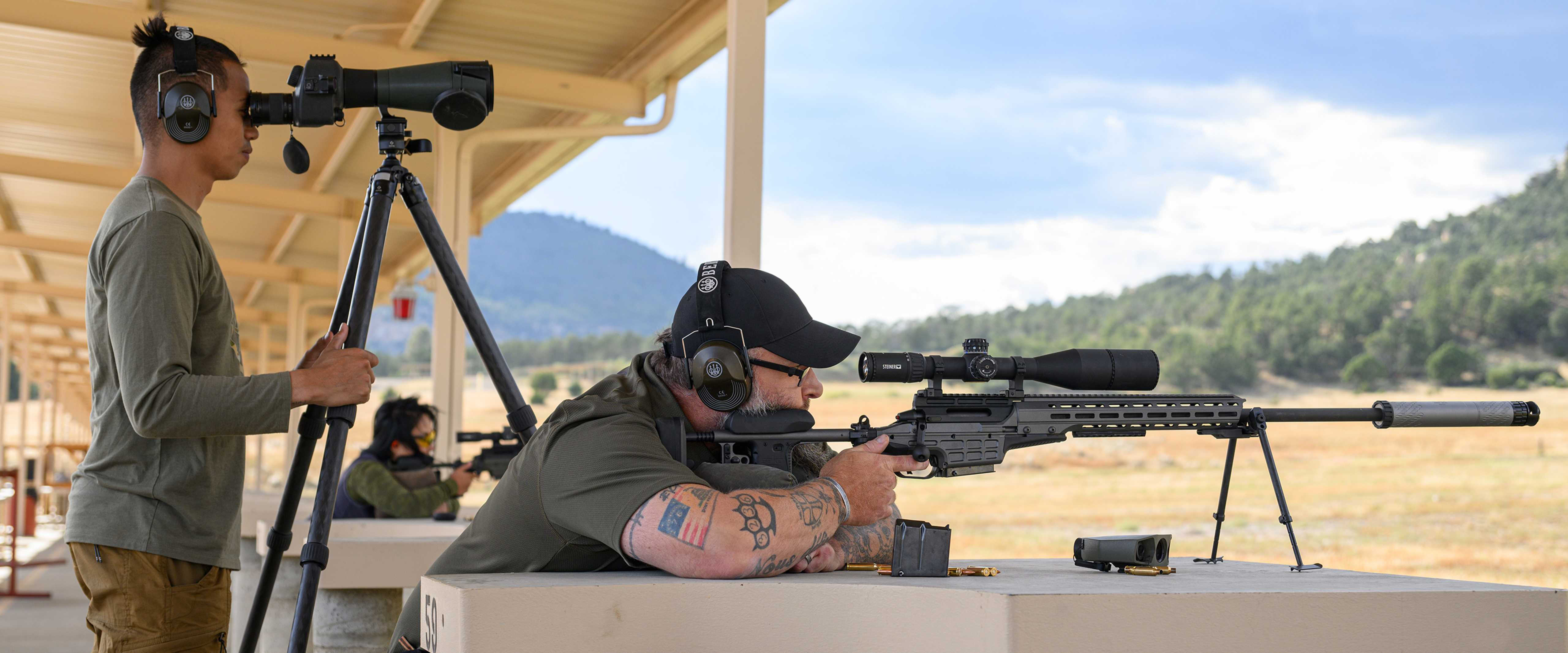
Reaching "the four digits" is a process of removing variables. Your Sako rifle comes with a sub-MOA guarantee, but at 1,000 yards, a "half-inch" group at 100 yards becomes a ten-inch group—and that's before the wind starts blowing. To master long-range precision, you must engage in a technical "tuning" of the rifle system.
Advanced Chronography: The SD Factor
Standard Deviation (SD) in your muzzle velocity is the silent killer of long-range consistency.
- The Math: If your 10-shot string has an Extreme Spread (ES) of 40 feet per second, you will see significant "vertical stringing" at 1,000 yards. The bullets traveling faster will hit higher; the slower ones will hit lower.
- The Tuning: Use a Doppler radar or magnetospeed to find your true SD. For 1,000-yard work, you are looking for an SD under 10 fps. This is achieved by matching Sako high-grade brass with consistent powder charges or using Sako’s factory-match loads which are held to the tightest lot-to-lot tolerances in the industry.
Scope-to-Bore Leveling: The "Cant" Error
At 1,000 yards, if your rifle is tilted (canted) just 1 degree to the left, your point of impact will shift nearly 5 inches.
- The Fix: You must use a bubble level on your optic. Because Sako rifles feature integrated rails, the mounting surface is already perfectly perpendicular to the bore's vertical axis. Align your reticle to a plumb line and trust your level. At long distances, "eyeballing" a level rifle is a guarantee for a miss.
Harmonic Tuning with Muzzle Devices
Every barrel vibrates like a tuning fork when fired. This is called "barrel whip."
- The Adjustment: By adding a muzzle brake or a suppressor (most Sakos come threaded 5/8x24), you are changing the barrel’s "harmonics." A self-leveling brake like the ones used on the TRG series doesn't just reduce recoil; it changes the "exit node"—the exact moment the vibration cycle hits its peak.
- The Result: Proper tuning allows the bullet to leave the muzzle at the most stable point of the vibration cycle, shrinking your groups and increasing your "Cold Bore" consistency.
True Your Ballistic Coefficient (BC)
The BC listed on a box of ammunition is a laboratory average. In the real world, altitude, humidity, and the specific rifling of your Sako barrel will affect the bullet's "drag."
- The Drill: Shoot at 600 yards and compare your actual drop to what your ballistic calculator predicted. If the bullet hit lower than expected, your "real world" BC is lower than the advertised one. "Truing" your BC in your app ensures that when you dial for 1,000, the solution is based on your rifle's unique physics, not a theoretical average.
Managing Thermal Drift
After five shots, your barrel is hot. This can cause the point of impact to shift slightly.
- The Pro Tip: Record your "Cold Bore," "Warm Bore," and "Hot Bore" data. A Sako barrel is incredibly stable, but at 1,000 yards, even a 0.2 MOA shift is noticeable. Know your rifle’s personality. If it hits slightly right when hot, you don't fight the rifle; you simply hold for it.