The TRG Heritage: Why the World’s Elite Choose Sako
Support
In the professional world of long-range interdiction, the rifle is not just a tool; it is a life-support system. While a hunting rifle is designed to be carried for miles and fired once, a tactical precision rifle must be designed to be lived with.
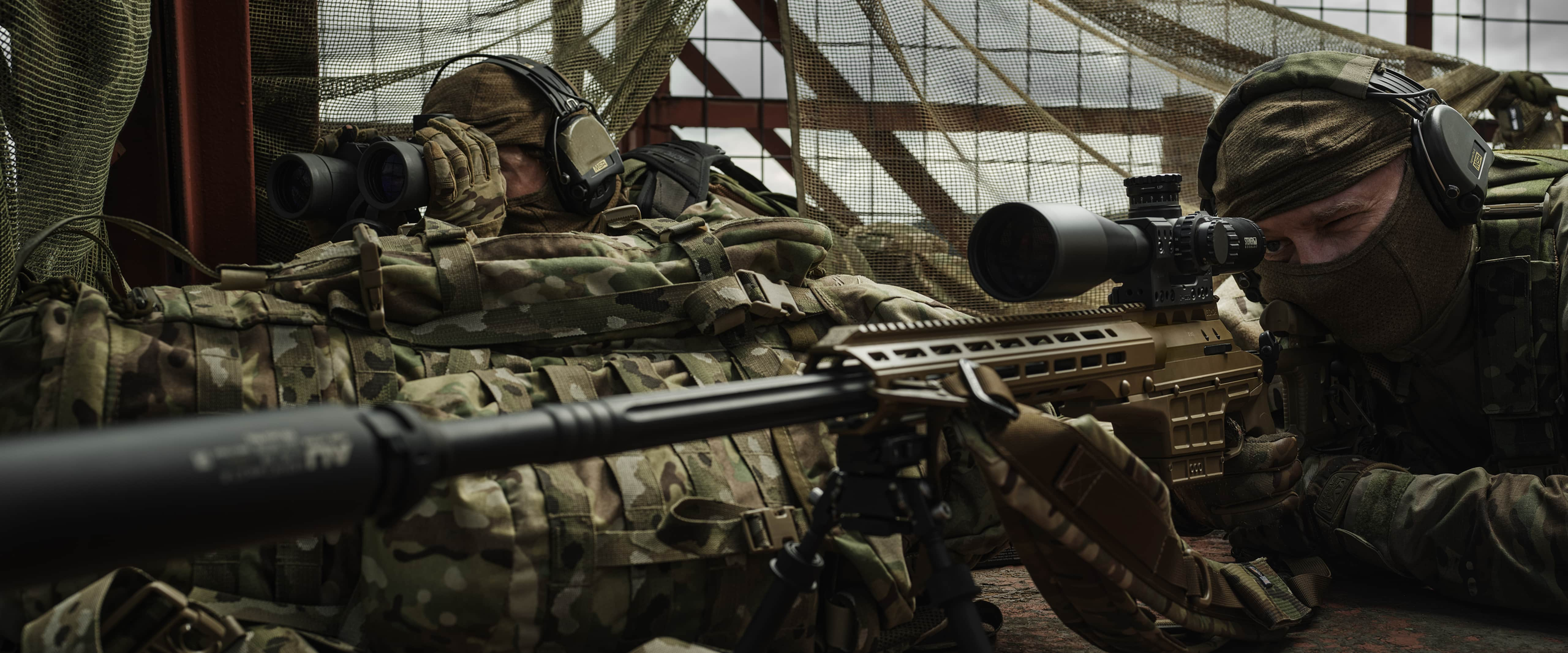
In the professional world of long-range interdiction, the rifle is not just a tool; it is a life-support system. While a hunting rifle is designed to be carried for miles and fired once, a tactical precision rifle must be designed to be lived with. It must survive the "operator tax"—the absolute mechanical abuse of being hauled through urban rubble, dragged across desert floors, and subjected to thousands of rounds of high-pressure match ammunition without losing its "Cold Bore" zero.
The Sako TRG is not a "tactical" version of a sporting rifle. It is a purpose-built weapon system that has set the global standard for sniper platforms for over three decades. From the French GIGN to the elite units of the Finnish Defence Forces, the TRG is chosen not for its aesthetics, but for its redundant reliability and unflinching consistency.
The Action: The Heart of the Sniper System
A precision rifle is only as good as the rigidity of its action. The TRG action is cold-hammer-forged from high-grade steel, but its geometry sets it apart from its peers.
1. The Three-Lug Bolt and 60-Degree Throw
Most traditional precision rifles utilize a two-lug system, which requires a 90-degree bolt lift. In a high-stress scenario, 90 degrees is an eternity.
- The Clearance Logic: The TRG’s three-lug bolt requires only a 60-degree lift. When you are running a large tactical optic with oversized windage and elevation turrets, that 60-degree throw provides massive clearance for your hand. You can cycle the bolt with a flat palm or a gloved hand without ever barking your knuckles on the scope or losing your cheek weld.
- Massive Extraction: The TRG extractor is a reinforced, heavy-duty claw. In tactical environments, you may be running ammunition that has sat in 120°F heat, causing increased chamber pressures. The TRG is designed to "rip and flip" even the stickiest brass, ensuring that a "failure to extract" never happens when a follow-up shot is required.
2. The Integrated Rail System
On many rifles, the scope base is a separate metal piece held on by four tiny screws. These are the primary failure points in a tactical rifle. A single loose screw can shift your zero by three minutes of angle (MOA).
- Monolithic Integration: The TRG features a 17mm dovetail or Picatinny rail machined directly into the receiver's top. There are no screws to shear off and no glue to fail. The optic becomes a structural part of the action, providing the most stable platform for long-range optics in the industry.
The Chassis: Engineering for Endurance
A sniper may spend twelve hours behind a rifle, waiting for a thirty-second window. If the rifle fights the shooter's anatomy, the shot will be missed. The TRG chassis (specifically the TRG 22/42 and the modular M10) is a masterclass in human-machine interface.
1. The Aluminum Skeleton and Composite Shell
Modern "all-aluminum" chassis are popular, but they have a distinct flaw: they are thermal conductors. In the Arctic, an aluminum stock will sap the heat from your face; in the desert, it will burn you.
- The Hybrid Approach: The TRG utilizes an internal aluminum skeleton for absolute rigidity, but it is encased in a high-density polyurethane shell. This "warm" composite deadens sound (preventing the "clack" of a rifle against a rock) and provides a comfortable interface for the shooter in extreme temperatures.
- The "Dead" Feel: When a TRG fires, the chassis is designed to absorb vibration. Unlike wood or light synthetics that "ring" or "jump," the TRG has a "dead" recoil impulse. It pushes straight back into the shoulder, allowing the shooter to stay in the glass and watch the bullet's "trace" all the way to the target.
2. Modular Ergonomics
No two shooters have the same length of pull or facial structure. The TRG allows for granular adjustment of the cheekpiece (height and tilt) and the buttplate (height, pitch, and distance).
- Tool-Less Adjustment: On the M10 and updated TRG models, these adjustments can be made in the field without a toolbox. This allows an operator to adjust the rifle's fit based on whether they are wearing a heavy winter parka or a lightweight plate carrier.
The Two-Stage Trigger: A Precision Failsafe
In a tactical environment, a "hair-trigger" is a liability. A sniper often operates under extreme physical stress, with cold fingers or high adrenaline.
- The Tactical "Wall": The TRG utilizes a world-class two-stage trigger. The first stage allows the shooter to take up the initial weight (roughly 2-3 lbs), reaching a distinct, tactile "wall." This ensures that the final break is a conscious, controlled decision.
- Geometric Customization: Not only can you adjust the pull weight, but you can also adjust the angle and position of the trigger shoe. You can move the shoe forward or backward to match the length of your trigger finger, ensuring that you are always pulling straight back and never "torquing" the rifle to the side.
The TRG M10: The Future of Multi-Caliber Interdiction
The TRG M10 evolved the heritage into a mission-configurable system. It allows the operator to swap between .308 Win, .300 Win Mag, and .338 Lapua Magnum on a single platform.
- The Bolt Head Swap: The M10 features a modular bolt head. You don't just swap the barrel; you swap the bolt head and the magazine, ensuring that the feeding and extraction geometry are perfectly matched to the cartridge.
- Mission Specificity: You can train with .308 Win (lower cost, lower recoil) and deploy with .338 Lapua Mag for long-range engagements, all while using the same trigger, same stock, and same muscle memory.
The Final Verdict: Why It Matters
At the end of the day, the TRG Heritage is about Confidence. When you are asked to make a shot at 1,200 meters, you cannot have a single doubt about your equipment. You need to know that the barrel's cold-hammer-forged rifling is perfect, that the action is rock-solid, and that the trigger will break like a glass rod every single time.
The TRG is the culmination of a century of Finnish engineering and three decades of combat feedback. It is built for the professional who knows that "precision" is not just a group on a paper target—it is the result of a perfectly engineered system.
Choose the TRG. Because when the shot of a lifetime is on the line, there is no room for second best.