Beyond the Timberline: Ballistic Calculations at High Altitude & Incline
Backcountry
Shooting above the timberline introduces atmospheric and spatial dynamics that do not exist at sea level or in flat lowland terrain. The open expanses of mountain basins often present long-range shooting opportunities where wind vectors swirl unpredictable through canyons, temperatures drop rapidly, and sight lines cut across steep ravines. Under these conditions, relying on standard "box-velocity" drop tables or basic flat-ground ballistic estimates leads directly to missed opportunities or, worse, non-lethal wounding shots.
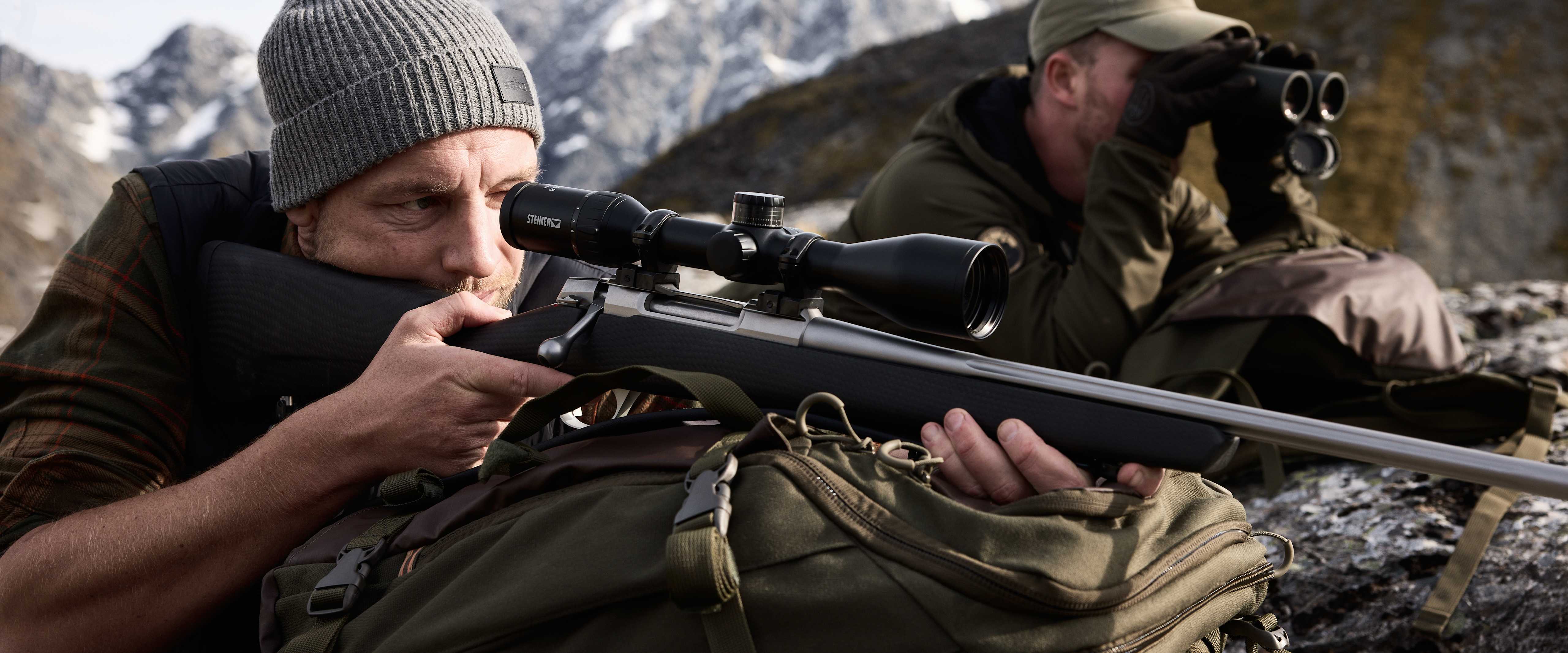
Mastering long-range accuracy in high-country environments requires a thorough understanding of air density adjustments, steep-angle geometry, real-world drag coefficient truing, and terminal velocity dynamics. When shooting across deep alpine valleys, ballistics transforms from a series of static field approximations into a precise exercise in applied atmospheric physics.
1. Atmospheric Density, Station Pressure, and Density Altitude
The single greatest atmospheric change encountered when moving from lowlands to mountain ridges is the reduction in overall air density. Air is a fluid medium; as elevation increases, atmospheric pressure drops, and air molecules spread further apart. This reduction in atmospheric drag allows projectiles to travel through the air with less resistance, retaining their velocity and kinetic energy significantly longer than they would at sea level.
Hunters often make the mistake of adjusting their ballistic solvers based solely on "Barometric Pressure" read from a local weather report or smartphone app. Weather stations report Barometric Pressure corrected to Sea Level, which removes the effect of elevation to standardize regional weather maps.
For ballistic calculations, you must use Station Pressure—the absolute, uncorrected atmospheric pressure measured directly at your specific position using a handheld weather station—or calculate Density Altitude (DA).
- Impact on Bullet Trajectory: In thin, high-altitude air (e.g., 9,000 feet DA), a bullet experiences less drag. Consequently, it hits higher than it would at sea level using the same turret elevation setting.
- Impact on Wind Drift: Reduced air density also diminishes the surface resistance acting against the side of the bullet. A 10 mph crosswind pushes a bullet significantly less at 9,000 feet than it does at sea level, reducing wind deflection downrange.
2. The Geometry of Incline: Angle Cosine Corrections
Mountain hunting frequently demands shots at severe incline or decline angles—whether firing up a steep scree field at a bedded bull or down into an alpine bowl. A fundamental rule of trajectory dynamics is that gravity acts only on the horizontal component of a bullet's flight path, not on the direct line-of-sight distance measured by a basic laser rangefinder.
When a target is situated at a steep angle (θ), the line-of-sight distance (DLOS) measured directly to the animal is longer than the horizontal distance (DHORIZ). If a hunter dials their optic elevation turret for the line-of-sight distance of 500 yards on a 35-degree incline, they will input far too much elevation drop and fire completely over the target's back.
The physical relationship is governed by the Rifleman's Rule, which utilizes the cosine of the slope angle:
Whether firing uphill or downhill, the mathematical adjustment remains identical: the horizontal distance is always shorter than the line-of-sight distance, meaning you must always dial or hold for less distance than the line-of-sight measurement indicates.
3. Truing Ballistic Coefficients in Real-World Environments
The Ballistic Coefficient (BC) printed on ammunition packaging represents an average value measured under controlled, sea-level laboratory conditions. In actual field environments—where barrel twist rates, bore dimensions, air density, and muzzle velocities vary—the true drag profile of your projectile will deviate from the advertised factory number.
To eliminate vertical stringing at extended ranges, hunters must "true" their ballistic solver prior to embarking on a backcountry trip.
- Chrono Muzzle Velocity: Utilize a Doppler radar or magneto-speed chronograph to measure the exact muzzle velocity and Standard Deviation (SD) of your specific load.
- Establish Baseline Impact: Zero the rifle precisely at 100 yards under calm conditions.
- Validate Downrange Drop: Fire a three-to-five shot group at a known target distance (e.g., 600 yards) under verified atmospheric conditions.
- True the BC: If the actual point of impact is lower than the solver predicted, the bullet experienced more drag than advertised; lower the G1 or G7 BC in the app until the calculated trajectory matches the physical impacts on target. If the bullet impacted higher, increase the BC value.
4. The Terminal Velocity Floor and Ethical Boundaries
While thin alpine air preserves velocity downrange, extreme distance combined with drag eventually decays a bullet's kinetic energy below its functional limit. Precision placement is only one component of taking an animal ethically; the projectile must retain sufficient velocity upon impact to initiate hydraulic expansion, peel back its jacket, and create a permanent, lethal wound channel through muscle and heavy bone structures.
Most premium modern hunting projectiles—including monolithic copper options and bonded soft-points—require a minimum impact velocity to expand reliably:
- Monolithic Copper Bullets: Typically require a minimum impact velocity of 1,800 to 2,000 fps to force hydraulic fluid into the tip cavity and initiate petal expansion. Below this threshold, monolithic bullets act like solid target darts, passing straight through soft tissue without creating adequate wound channels.
- Bonded Lead-Core Bullets: Require roughly 1,600 to 1,800 fps to mushroom effectively. Below this floor, bullet expansion ceases, resulting in slow energy transfer and long tracking jobs.
Long-range mountain hunting demands a firm commitment to terminal ethics. Before taking a shot across an alpine canyon, the hunter must verify their ballistic solver to ensure that the bullet's impact velocity remains safely above its terminal floor at the target's precise distance.
Furthermore, time-of-flight variables must be accounted for. At 600 yards, a magnum bullet takes nearly 0.8 seconds to reach the target. In that fraction of a second, an un-alert animal can easily take a step, shifting a shot aligned with the vitals into the flank or shoulder. High-altitude ballistic mastery requires recognizing that having the technical capability to make a long shot is not a justification for avoiding the physical effort required to close the distance. When conditions permit, the mark of a true backcountry marksman is using their physical stamina to crawl closer, reducing flight time and guaranteeing an ethical, single-shot harvest.